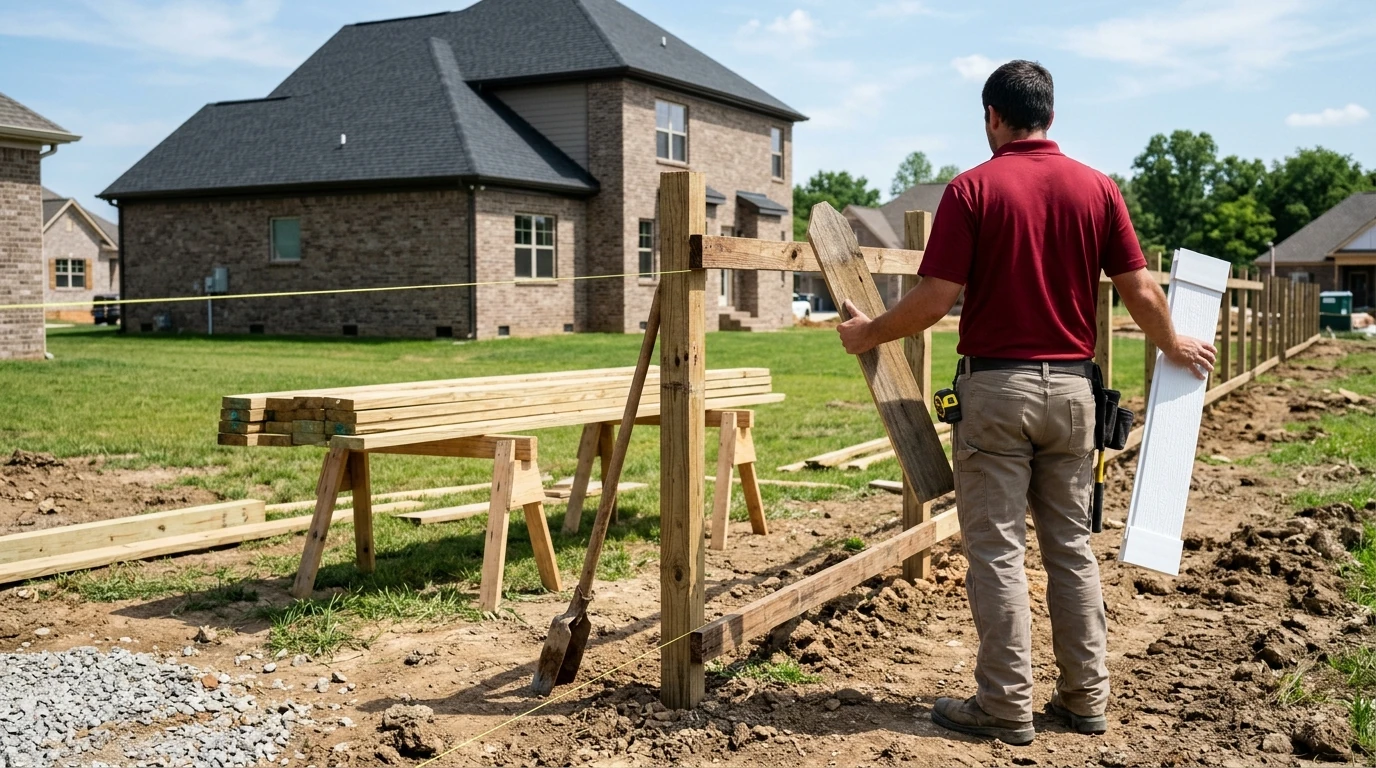
TL;DR: A 150-foot wood privacy fence in the Harvest, AL area typically installs for $3,750 to $6,000, while a comparable vinyl privacy fence runs $4,500 to $7,500. Wood costs less upfront but needs restaining every two to three years and usually lasts 15 to 20 years. Vinyl costs more on day one, needs almost no upkeep, and often lasts 20 to 30 years, which can make its 15-year total cost competitive with or lower than wood’s.
If you’re comparing fence bids for a backyard in one of Harvest’s newer subdivisions and the quotes range from a modest wood estimate to a vinyl price nearly double that, you’re not being overcharged twice. You’re pricing two different cost curves. Wood costs less to install but keeps costing money every couple of years. Vinyl costs more on day one and then mostly disappears from your budget. In unincorporated Madison County, where most Harvest lots sit under HOA covenants written for a uniform subdivision look, the material you pick also has to clear your HOA’s architectural review before it clears your wallet.
How much does a wood vs vinyl fence cost per linear foot in Harvest, AL?
A standard 6-foot wood privacy fence typically installs for $25 to $40 per linear foot in North Alabama, while a comparable 6-foot vinyl privacy fence runs $30 to $50 per linear foot. For a typical 150-foot backyard perimeter, that puts wood around $3,750 to $6,000 installed and vinyl around $4,500 to $7,500, before maintenance is factored in.
| Wood (pressure-treated privacy) | Vinyl (privacy) | |
|---|---|---|
| Installed cost per linear foot | $25-$40 | $30-$50 |
| Typical 150-ft backyard total | $3,750-$6,000 | $4,500-$7,500 |
| Expected lifespan | 15-20 years | 20-30+ years |
| Maintenance per year (averaged) | $200-$350 (staining/sealing every 2-3 years) | $50-$100 (occasional wash, hardware checks) |
| Estimated 15-year total cost | $7,000-$11,000 | $5,500-$9,000 |
These are typical regional ranges, not a quote for any specific yard. Gate count, post spacing, terrain, and the grade of lumber or vinyl panel all move the number up or down. For a fuller breakdown of what drives price within each material, see our complete Harvest fence cost guide.
What does each fence actually cost once you add 15 years of upkeep?
Wood’s lower sticker price gets eaten by maintenance over time, while vinyl’s higher sticker price mostly stays flat. That’s the core trade-off behind the 15-year totals in the table above.
A pressure-treated wood fence needs restaining or resealing roughly every two to three years to keep moisture out of the grain. In North Alabama’s hot, humid summers, that interval often runs shorter than it would in a drier climate, because UV and moisture both accelerate graying and checking. Each treatment, whether done yourself or hired out, typically costs $500 to $900 for a 150-foot run once you count materials and labor. Spread over 15 years, that’s roughly $3,000 to $4,500 in maintenance on top of the install cost.
Vinyl doesn’t need staining, sealing, or painting. Most upkeep is an occasional rinse with a hose and tightening or replacing a hinge or latch every few years. Budget $50 to $100 a year for that, which is closer to $750 to $1,500 over 15 years. That’s why vinyl’s higher install cost often closes the gap with wood, or beats it outright, once a decade and a half has passed.
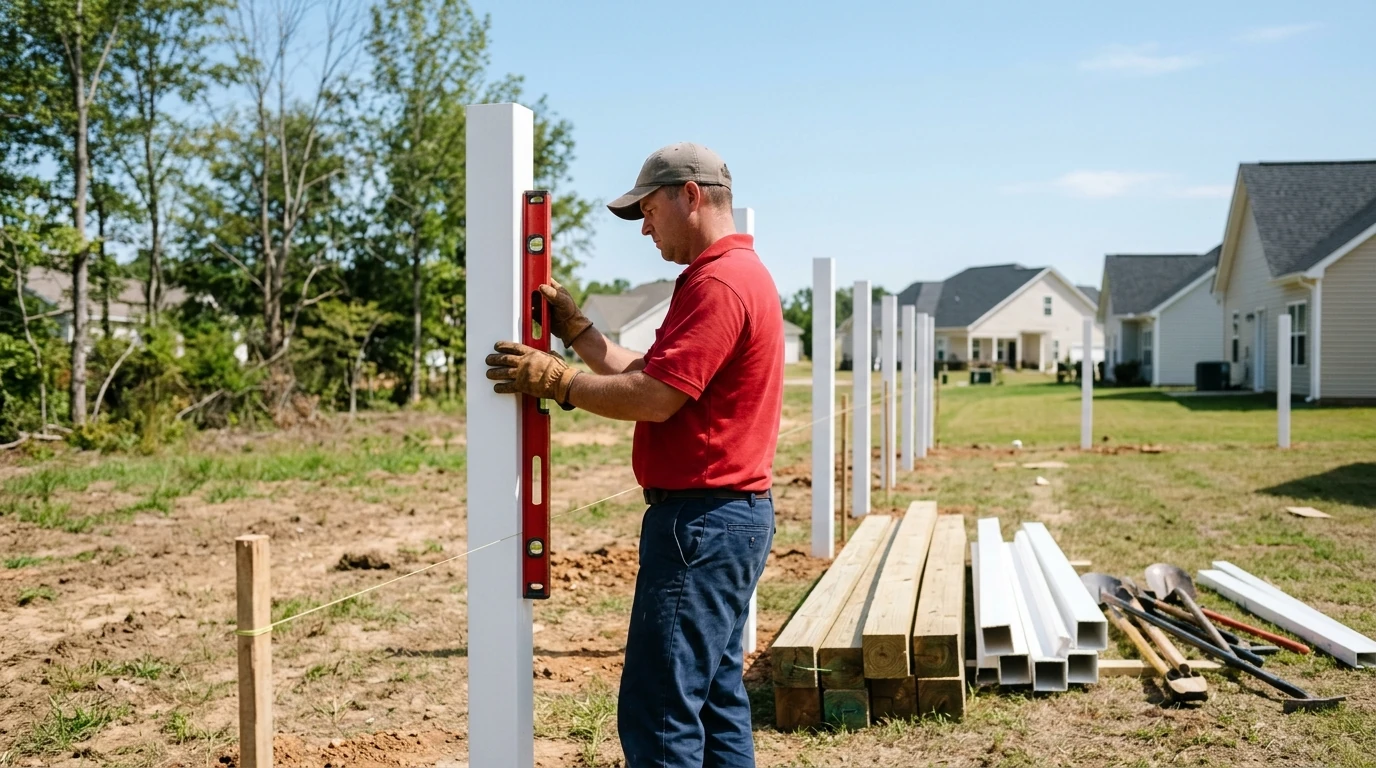
How long does a wood fence actually last in Alabama’s heat and humidity, and how does vinyl hold up?
A well-built pressure-treated wood fence in North Alabama typically lasts 15 to 20 years with regular maintenance, while a quality vinyl fence typically lasts 20 to 30 years with almost none. The gap comes down to how each material handles moisture.
Wood posts set in ground contact are the first thing to fail. Harvest’s clay-heavy soil holds water after heavy spring rain, and that moisture wicks into end grain at the base of each post even when the rest of the board is sealed. Expect post rot, not panel failure, to be what eventually ends a wood fence’s life. Choosing ground-contact-rated lumber and keeping mulch and sprinkler spray off the posts both buy years.
Vinyl doesn’t rot or attract termites, which matters in a region with active termite pressure. It does expand and contract with temperature swings, so a quality installer leaves room at the rail-to-post connections for that movement. Cheaper vinyl can yellow or go brittle after a couple of decades in direct Southern sun; better-grade panels are UV-stabilized and hold their color far longer. If you’ve already read our general decks, pergolas, and fence cost guide, the same quality tiers that affect deck lumber and composite boards apply here too.
Do you need a permit to build a fence in Harvest, AL, and will your HOA approve it?
Harvest is unincorporated Madison County, so fence permitting runs through Madison County Building and Fire Inspection rather than the City of Madison’s permit office. Whether a permit is actually required, and what height or setback rules apply, depends on current county policy, so call the county inspection office directly before you order materials or dig a single hole.
Separately from any county permit, most Harvest subdivisions carry HOA covenants with an architectural review committee. These committees commonly restrict fence height, approved materials, and even color, sometimes requiring vinyl in a specific shade or limiting wood to a natural or approved stain tone. Submit your fence plan to the HOA for written approval before installation starts. A fence that meets county code but violates a covenant can still trigger a forced removal or fine.
Once you have the green light, call Alabama 811 at least a few business days before digging any post holes. It’s a free service that marks buried gas, water, and utility lines on your property, and skipping it risks a damaged line and a repair bill that dwarfs anything you’d spend on the fence itself.
Which fence makes more sense for your yard?
Choose wood if the lower install cost matters more right now than the lower long-term cost, or if your HOA’s architectural guidelines call for a wood-fence look. Choose vinyl if you’d rather pay once and mostly forget about the fence for two decades, especially on a long perimeter where maintenance labor adds up fast.
Budget flexibility often decides it in practice. A family stretching to cover a 150-foot perimeter this year may install wood now and reassess later, accepting the restaining cycle as a trade for a smaller check today. A household planning to stay put for 15-plus years, or one that simply doesn’t want a recurring exterior maintenance task, usually comes out ahead with vinyl once the full cost is counted. Either way, get the HOA approval and the county’s current permit answer settled before a crew shows up with materials, not after.
Davis Construction Contractors builds and repairs decks, pergolas, and fences across Madison County, including Harvest, and can walk a specific yard through both material options with real measurements instead of averages. Request a fence estimate and get numbers based on your actual property line, not a per-foot range.
About Davis Construction Contractors
Davis Construction Contractors is a family-owned, licensed and insured construction company that has served Madison and North Alabama, including Harvest, since 1998. Founded by Heath Davis, the company handles new construction, remodeling, decks, pergolas, fences, roofing, siding, and painting across Madison County and the surrounding Huntsville area.
Need help now? Call Davis Construction Contractors at (256) 771-0326.